What is the gundrilling process?
Gundrilling is a precision deep hole drilling process that uses a single-flute cutting tool with an internal coolant channel to produce straight, accurate holes at depth-to-diameter ratios up to 400:1. High-pressure coolant flows through the center of the tool to the cutting zone and flushes chips out through the V-shaped external flute. The result is a clean, straight hole with tight tolerances and consistent surface finish, even at extreme depths.
Gundrilling Process: How It Works, Parameters, and Tooling Guidance
Gundrilling is the standard method for producing deep, straight holes in metal components where conventional drilling cannot deliver the required depth, straightness, or surface quality. It is used in aerospace, defense, medical, automotive, hydraulics, mold making, and energy manufacturing.
What makes gundrilling different is its self-contained design: high-pressure coolant delivered through the tool, a single cutting edge for controlled material removal, and a dedicated chip evacuation path that keeps the process stable from start to finish. This makes it possible to drill holes at depths where a twist drill would wander, overheat, and fail within the first few diameters.
This page covers how the process works, what parameters it achieves, how to set it up on different machines, what problems to watch for, and how to choose the right tooling.
Talk to a Process Engineer →
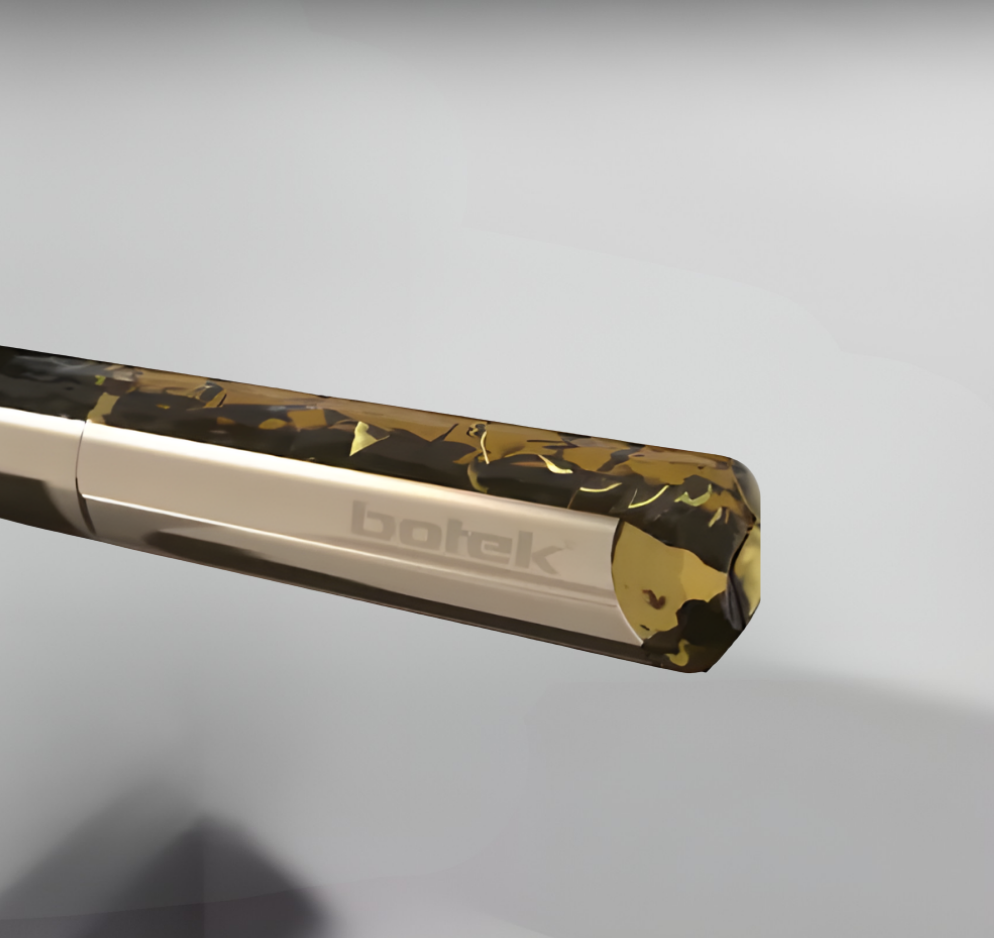
Gundrill Components: What the Tool Is Made Of
A gundrill is built around one core principle: separating coolant delivery from chip evacuation. This is the opposite of a conventional twist drill, and it is what allows gundrilling to work at extreme depths.
Cutting Head
Carries a single carbide cutting edge that removes material as the drill advances. Two hardened guide pads are mounted on the head. These pads ride against the hole wall and keep the tool tracking straight throughout the depth. Worn guide pads are the leading cause of hole drift.
Drill Tube (Shank)
The hollow body of the tool. Coolant travels through the internal channel to the cutting zone. A V-shaped flute runs along the outside, forming the chip evacuation path between the tool and the hole wall.
Driver and Shank Connection
Connects the tube to the machine spindle. On some setups, a rotating coolant connector seals coolant delivery as the spindle turns.
botek® Single-Flute Gundrills
0.5 mm to 51.2 mm (0.020" to 2.016"), available for solid drilling, counterboring, stepped holes, and trepanning. Each tool is engineered in Germany with geometry matched to the material and application.
Twin-Fluted Drills
4.5 mm to 43 mm (0.177" to 1.693"). Two cutting edges and two flutes for higher feed rates and process stability in shorter-depth, higher-volume work.
Need full specifications for single-flute gundrills or twin-fluted drills? Contact our team for detailed tooling data.
How the Gundrilling Process Works, Step by Step
Each step in the gundrilling cycle depends on the one before it. If coolant pressure is wrong at Step 2, chip evacuation fails at Step 3. Understanding this sequence makes it easier to set up a stable process and find the root cause when something goes wrong.
Tool Entry and Guidance
The gundrill enters the workpiece through a drill bushing (dedicated machine) or a pre-drilled pilot hole (machining center). Both serve the same purpose: to stabilize the tool at the most vulnerable moment of entry, before the guide pads engage the hole wall. Without proper entry guidance, the drill will walk, regardless of tool quality.
Coolant Pressurization
As soon as the tool enters the workpiece, high-pressure coolant flows through the drill tube and exits at the cutting head. It lubricates the cutting edge, lubricates the guide pads, and pressurizes the chip evacuation path. All three happen at once.
Chip Evacuation
Chips are swept backward by coolant pressure through the V-shaped external flute and exit at the entry point. This chip path must stay clear throughout the cycle. A blocked flute is the primary cause of gundrill breakage.
Depth Advancement
The tool advances at a controlled feed rate while the spindle or workpiece rotates. The guide pads stay in contact with the hole wall continuously, acting as a self-piloting bearing that keeps the drill on center through the full depth.
Breakthrough and Retraction
Feed rate is reduced near breakthrough to control exit quality and prevent burr formation. Once the hole is complete, coolant flushes remaining chips, and the tool retracts. The finished hole is checked for diameter, straightness, and surface finish.
With drill bushing (dedicated deep hole drilling machine)
Without drill bushing (machining center, turning center, milling machine)
What Tolerances and Surface Finish Can Gundrilling Achieve?
The table below shows the typical capability range for single-flute gundrilling with botek® tools.
| Parameter | Typical Range |
|---|---|
| Hole diameter | 0.5 mm to 51.2 mm (0.020" to 2.016") |
| Depth-to-diameter ratio | Up to 400:1 on a dedicated deep hole drilling machine Up to 20 to 40:1 on a CNC machining center |
| Surface finish | Ra 0.4 to 1.6 µm (application-dependent) |
| Hole straightness | ±0.1 mm per 100 mm of depth (typical) |
| Roundness tolerance | IT6 to IT7 achievable in optimized conditions |
| Positional accuracy | Dependent on entry guidance quality |
These values depend on four variables working together: cutting speed (Vc), feed rate (fz), coolant pressure, and tool geometry. Adjusting one without the others will affect surface finish, hole drift, or tool life.
For example, hitting Ra 0.4 µm consistently requires clean coolant at the right concentration, a freshly reground cutting edge, guide pads in good condition, and a feed rate tuned to the workpiece material. Titanium needs different cutting values than 4140 steel.
botek® America's application engineers establish the correct cutting values for your material, machine, hole diameter, and tolerance requirements before production starts. This process layout step saves time and avoids trial-and-error on the shop floor.
Coolant Requirements for Gundrilling: Pressure, Fluid, and Flow
Coolant is a functional component of the gundrilling process, not an accessory. Without correct pressure, flow, and fluid quality, chips will not evacuate, the cutting edge will overheat, the guide pads will score the hole wall, and the tool will break.
Coolant Pressure by Hole Diameter
| Hole Diameter | Approximate Coolant Pressure |
|---|---|
| Under 3 mm (0.12") | 80 to 200 bar |
| 3 to 8 mm (0.12" to 0.31") | 60 to 120 bar |
| 8 to 20 mm (0.31" to 0.79") | 40 to 80 bar |
| Over 20 mm (0.79"+) | 30 to 60 bar |
These are starting points. Actual pressure also depends on hole depth and chip form. Longer holes need higher pressure to move chips the full length of the flute.
Coolant Fluid: Oil vs Emulsion
Deep hole drilling oil provides better lubrication and is preferred for small diameters, titanium, stainless steel, Inconel, and applications where surface finish and tool life are priorities.
Water-miscible emulsion works for larger diameters and higher flow applications. Minimum concentration is 10 to 12% with appropriate additives. Below that, the lubricating film breaks down, guide pad wear increases, and tool life drops.
Four Roles Coolant Plays in Every Cut
- Chip evacuationPressure flushes chips through the V-flute and out of the hole.
- Cutting edge lubricationReduces heat and wear at the cutting zone.
- Guide pad lubricationWithout adequate coolant film, guide pads score the hole wall and wear rapidly, destroying diameter accuracy and surface finish.
- Hole wall conditioningIn optimized processes, guide pad contact produces a light burnishing effect that improves final surface finish.
Coolant Filtration
Recirculated coolant must be filtered to 25 microns or better. Contaminated coolant carries abrasive particles back into the cutting zone, accelerating wear and raising Ra values. Do not rely on visual inspection to check coolant condition. Use a refractometer for concentration and a filtration monitor for particle load.
Dedicated Deep Hole Drilling Machine vs CNC Machining Center
The machine type affects achievable depth, process stability, and production output. This table helps production teams choose the right setup for their application.
| Feature | Dedicated Machine | CNC Machining Center / Lathe |
|---|---|---|
| Depth-to-diameter | Up to 400:1 | Up to 20 to 40:1 (recommended) |
| Coolant pressure | Up to 200+ bar (dedicated system) | Typically 70 to 100 bar max (through-spindle) |
| Chip collection | Integrated at entry | Requires separate setup |
| Entry guidance | Drill bushing (precise, sealed) | Pilot hole (effective within D/D limits) |
| Best for | Production, deep holes, tight tolerances, hard materials | Prototyping, moderate depths, lower volumes |
Use a Dedicated Machine When:
Your holes exceed 40:1 depth-to-diameter, require tight surface finish, involve titanium, Inconel, or hardened steel, or are being produced at high volume. A dedicated machine delivers the process stability a machining center cannot replicate in these conditions.
Use a Machining Center When:
You are prototyping, running low volumes, or drilling in the 10:1 to 30:1 range in aluminum or mild steel with sufficient through-spindle coolant. botek®'s application engineers can confirm whether your machine's coolant and spindle capability meet the requirements for your specific hole.
Common Gundrilling Problems and How to Fix Them
Most gundrilling problems come from one of three sources: insufficient coolant, worn tooling, or incorrect setup. The five issues below cover the majority of what manufacturers encounter in production.
Hole Drift and Drill Walking
Incorrect drill bushing clearance, worn or damaged guide pads, wrong pilot hole diameter, too-high feed rate at entry.
Check bushing bore size against tool diameter. Inspect guide pads before every production run. Reduce feed rate during the first 2 to 3 diameters of entry. Confirm coolant pressure is within spec for your hole diameter.
Chip Jams and Evacuation Failure
Coolant pressure below minimum, chip form too long, blocked or damaged V-flute, coolant concentration below 10%.
Measure pressure at the tool entry point, not just at the pump. Adjust feed rate to promote chip break. Inspect the flute at every regrind. Check coolant concentration with a refractometer.
Short Tool Life and Premature Wear
Low coolant concentration, cutting speed too high for the material, wrong or worn coating, guide pads running under inadequate lubrication.
Maintain 10 to 12% minimum concentration for emulsion, or switch to deep hole drilling oil for demanding materials. Reduce cutting speed in 10% steps until wear rate normalizes. Match coating to material: TiAlN for steel and cast iron, DLC or uncoated for aluminum, specialized coatings for titanium and stainless. Regrind before guide pads reach wear limit.
Gundrill Breakage
Chip jam (approximately 80% of breakage events), coolant pressure drop mid-cycle, drilling into a cross-hole or cavity without reducing feed, running the tool past its serviceable life.
Monitor coolant pressure throughout the cycle. A sudden drop means a chip jam is forming. Slow feed rate before cross-hole intersections. Set a regrinding schedule based on holes drilled, not visible wear. Stop the cycle immediately if cutting sound or pressure changes unexpectedly.
Poor Surface Finish (Ra Above Specification)
Dull or chipped cutting edge, worn guide pads, contaminated coolant, feed rate too high, excessive vibration or runout.
Regrind the tool. Surface finish degrades gradually as the cutting edge wears. Inspect and replace guide pads. Refresh coolant. Reduce feed rate in 10% steps. Check spindle runout at the cutting head. Even 0.01 mm of runout can significantly increase Ra values.
Still experiencing issues? botek® America's application engineers can review your cutting values, coolant setup, tooling condition, and machine capability to find the root cause.
Ask an Application Engineer →Gundrilling vs BTA Drilling: Choosing the Right Process
Both gundrilling and BTA drilling produce deep, precise holes, but they work differently. The primary decision factor is hole diameter.
| Feature | Gundrilling | BTA Drilling |
|---|---|---|
| Hole diameter range | 0.5 mm to 51.2 mm (0.02" to 2.0") | Typically from 20 mm (0.79") upward |
| Coolant delivery | Internal, through the tool | External, through assembly around the tool |
| Chip removal | External, through V-flute on outside | Internal, through drill tube bore |
| Depth-to-diameter ratio | Up to 400:1 | Up to 400:1 |
| Material removal rate | Moderate | Higher for large diameters and high feeds |
| Best for | Small to medium diameters, precision, tight tolerances | Large diameters, high-output production |
Below 20 mm, gundrilling is almost always the right process. Above 20 mm, both are technically possible. The choice depends on production volume, required finish, and available tooling. Many shops run both: gundrilling for small, precision holes and BTA drilling for large-diameter, high-volume work.
See BTA Drilling System for a detailed comparison.
Gundrilling Applications by Industry
Aerospace and Defense
Landing gear cylinders, hydraulic manifolds, fuel system components in Ti-6Al-4V, Inconel 718, and high-strength aluminum. Tight tolerances and hole straightness are critical for structural and fatigue performance.
Medical Technology
Surgical instrument channels, implant bores, and orthopedic device components in surgical stainless steel and medical-grade titanium. Surface finish quality directly affects implant performance and biocompatibility.
Automotive and Powertrain
Fuel rails, crankshaft oil galleries, camshaft bores, and transmission parts in steel and aluminum. High volumes and consistent hole quality are the main drivers.
Hydraulics and Pneumatics
Cylinder bores, valve body passages, and manifold drillings in steel and stainless steel. Straightness and finish affect seal performance and system pressure.
Tool and Mold Making
Cooling channel drilling in hardened mold steels (P20, H13, 1.2344). Precise positioning and clean hole walls are essential for conformal cooling performance.
Energy Technology
Heat exchanger tube sheets, turbine components, and heavy structural parts in nickel alloys and stainless steel.
Gundrilling Process FAQ
How deep can a gundrill drill?
On a dedicated deep hole drilling machine, up to 400:1 depth-to-diameter ratio. A 5 mm hole can reach 2,000 mm deep. On a CNC machining center with through-spindle coolant, the practical limit is approximately 20 to 40:1. The actual limit depends on coolant pressure, material, and chip evacuation distance at depth.
What coolant pressure does gundrilling need?
Pressure depends on hole diameter. Holes under 3 mm need 80 to 200 bar. Holes over 20 mm typically need 30 to 60 bar. The coolant must also be the right type: purpose-formulated deep hole drilling oil, or emulsion at 10 to 12% minimum concentration. Low pressure is the leading cause of chip evacuation failure and tool breakage.
What surface finish does gundrilling achieve?
Typically Ra 0.4 to 1.6 µm, depending on cutting speed, feed rate, coolant quality, and guide pad condition. In an optimized process, Ra values near 0.4 µm are achievable, often eliminating the need for a secondary finishing operation.
Can gundrilling be done on a CNC machining center?
Yes, within limits. If the machine has through-spindle coolant at 70 bar or higher, gundrilling works up to approximately 20 to 40:1 depth-to-diameter. A pilot hole replaces the drill bushing. For deeper holes, high production volumes, or difficult materials, a dedicated machine is the better choice.
What is the difference between a gundrill and a twist drill?
A twist drill has two cutting edges, no internal coolant, and becomes unreliable beyond approximately 5 to 8 times the drill diameter in depth. A gundrill has a single cutting edge, an internal coolant channel, and a dedicated chip evacuation flute. This design maintains straightness and surface finish at depths where any twist drill would wander and fail.
What causes a gundrill to break?
Chip jams cause roughly 80% of gundrill breakage. Chips block the V-flute, the tool seizes, and it breaks. Other causes: coolant pressure drop during the cycle, drilling into a cross-hole without slowing down, and running the tool past its serviceable life without regrinding.
What is a drill bushing?
A hardened, precision-ground guide component used on dedicated deep hole drilling machines. It aligns with the spindle axis, prevents tool deflection at entry, and seals the coolant system. On a machining center, a pilot hole performs the same function.
Regrinding and Coating: What to Expect
- Regrinding means in-house resharpening of your gundrill at our US facility using a 5-axis grinding machine.
- Coating is available on new tools only: botek® America does not recoat tools returned for resharpening. Specify coating at the time of your new tool order.
- Germany resharpening is not a standard service: it is available for aerospace customers only.
Get the Right Gundrill and Process Support from botek® America
Gundrills and Tooling
Single-flute gundrills, twin-fluted drills, solid carbide drills, BTA tools, ejector drilling tools, and custom tooling. Engineered in Germany, stocked and supported in Roselle, IL.
Application Engineering
Submit your hole diameter, depth, material, machine type, and tolerance requirements. Our engineers will develop the tooling solution and process layout, with German technical support when needed.
Trials, Regrinding and Coating
Validate your process at our Roselle, IL facility before production. In-house 5-axis regrinding extends tool life and reduces cost per hole. Coating is available on new tools to improve wear resistance.
botek® America application engineers in Roselle, Illinois work with U.S. manufacturers to develop the right gundrill geometry, cutting values, and coolant strategy for every application, backed by botek®'s German engineering expertise.