botek® America offers twin flute gundrills, also called twin-fluted or two flute drills, in solid carbide and brazed-head designs, with diameters from 2 mm (0.0787 in) up to 43.009 mm (1.6933 in). Pick a type below, or send your drawing and an application engineer will help match the tool to your hole. New to gundrilling? Read our gundrilling process guide.
Why buy twin flute gundrills from botek® America
botek® America is the U.S. division of botek Präzisionsbohrtechnik GmbH. We bring botek deep hole drilling tools to US shops and back them with engineering and service from Roselle, Illinois.
Application engineering
Send your drawing, material and hole requirements. An application engineer reviews them and helps you choose the tool type and diameter.
Submit your applicationTest on your application
Customer testing and trials let you see how a tool performs on your own application.
See customer testingSpecial tools to your drawing
If no standard type fits, send a drawing. botek designs special tools, and the specification page explains what we need.
How to specify a custom toolRegrinding in Roselle
Ask whether your twin fluted tool can be reground at our Roselle, Illinois facility. Send the tool type and diameter and we confirm.
See the regrinding serviceTwin flute gundrills by type and diameter range
The range map shows every botek twin fluted type on one diameter scale. Select a type to jump to its card. Product data comes from botek’s catalog, so confirm sizes and availability with us before you order.
Diameter range map
Diameter in millimeters, 0 to 50 mm.
- Solid carbide and brazed-head twin fluted drills
- Stepped and tap drills
- Counterboring tools
Solid carbide and brazed-head twin fluted drills
Stepped and tap drills
Counterboring tools
Solid carbide and brazed-head twin fluted drills
Round deep holes from 2.8 mm to 43.009 mm, depending on the type.
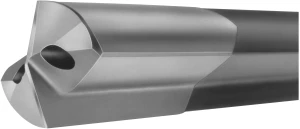
Type 120
Twin fluted drill with a solid carbide head. Larger diameters on request.
Ø 4.5 to 43.009 mm0.1772 to 1.6933 in
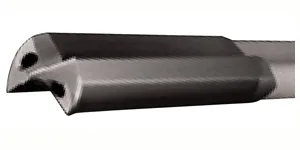
Type 120-HP
Twin fluted drill with a brazed carbide head in a high-performance design.
Ø 4.5 to 26.5 mm0.1772 to 1.0433 in
Send your drawing
Type 123
Solid carbide 2-fluted drill, coolant fed, with a double margin.
Ø 2.8 to 32 mm0.1102 to 1.2598 in
Type 123-HP
Solid carbide twin fluted drill in a high-performance design.
Ø 2.8 to 32 mm0.1102 to 1.2598 in
Send your drawing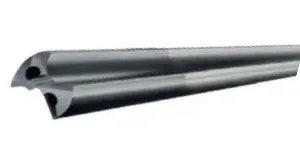
Type 123-04
Solid carbide 2-fluted drill that botek describes as giving the best bore quality in stainless steel.
Ø 6 to 16 mm0.2362 to 0.6299 in
Send your drawingStepped and tap drills
Stepped and tap-drill versions, from 2 mm to 43.009 mm.

Type 122
Twin fluted stepped drilling tool with a solid carbide head.
Ø 4.5 to 43.009 mm0.1772 to 1.6933 in
Type 123-01
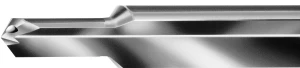
Solid carbide 2-fluted drill for tap holes, coolant fed, with a 90 degree step angle.
Ø 2 to 32 mm0.0787 to 1.2598 in

Type 123-02
Solid carbide 2-fluted step drill for tap holes, coolant fed, with a 180 degree step angle.
Ø 2 to 32 mm0.0787 to 1.2598 in
Counterboring tools
Twin fluted tools that enlarge an existing hole, from 4 mm to 40 mm.
Type 125
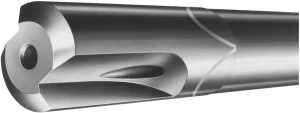
Twin fluted counterboring tool with a solid carbide head.
Ø 4 to 40 mm0.1575 to 1.5748 in

Type 125-03
Twin fluted counterboring tool with a guiding pilot, a solid carbide tip and a steel shank.
Ø 5 to 40 mm0.1969 to 1.5748 in
Send your drawingTwin flute or single flute gundrill: how to choose
Both families come from the same botek range. This comparison uses the types listed on botek.de.
| Compare | Single flute gundrills | Twin flute gundrills |
|---|---|---|
| Types listed by botek | 20 | 10 |
| Diameter range of the types listed | 0.5 to 113.99 mm | 2 to 43.009 mm |
| Designs | Solid carbide, brazed tip, indexable, counterboring, trepanning | Solid carbide or brazed head, stepped, tap drills, counterboring |
| Cutting design | One cutting edge, coolant channel, V-shaped chip flute | Two flutes, coolant fed |
| Advantages listed in botek’s catalog | Cost-effective, precise holemaking | Cost-effective, precise holemaking, higher feed rate possible |
| Machines | Described as well suited to CNC machining centers | Described as well suited to CNC machining centers |
Advantages and machine suitability are botek’s own catalog statements. An application engineer confirms what applies to your hole. Read how to choose a gundrill or gundrill vs twist drill.
Which twin flute gundrill type fits your hole?
Start from what the hole needs. Each row names the botek types to look at first.
| Your situation | Start with type | Diameter range |
|---|---|---|
| General twin fluted drilling with a solid carbide head | 120 | 4.5 to 43.009 mm |
| High-performance design | 120-HP, 123-HP | 2.8 to 32 mm; 120-HP 4.5 to 26.5 mm |
| Small diameters, coolant fed, double margin | 123 | 2.8 to 32 mm |
| Best bore quality in stainless steel (botek description) | 123-04 | 6 to 16 mm |
| Holes for taps | 123-01 (90 degree step), 123-02 (180 degree step) | 2 to 32 mm |
| Stepped hole | 122 | 4.5 to 43.009 mm |
| Enlarging an existing hole | 125, 125-03 | 4 to 40 mm |
Depth, material, tolerance and machine make the final call. Send your drawing and an application engineer will help you choose.
Twin flute gundrill terms explained
The words used on the cards above, in plain terms.
Twin fluted drill
A drill with two flutes. In botek’s range these are solid carbide or brazed-head tools from 2 mm to 43.009 mm.
Coolant fed
Coolant is supplied through the tool to the cutting zone.
Margin
The narrow land behind the cutting edge that guides the tool in the hole. A double margin has two.
Brazed carbide head
A carbide cutting head brazed onto the tool body.
Step angle
The angle of the step between two diameters on a stepped tool. Type 123-01 has 90 degrees, Type 123-02 has 180 degrees.
Stepped drill
Drills two diameters in one pass, so a stepped hole needs one operation.
Counterboring tool
Enlarges an existing hole to a larger diameter. Some versions have a guiding pilot.
High performance (HP)
botek’s name for its high-performance design variants, such as Types 120-HP and 123-HP.
What to send before you ask about twin flute gundrills
The more we know about the hole, the easier it is to narrow the choice.
- Drawing of the part, with the hole diameter and tolerance.
- Hole depth, and whether it is a blind or a through hole.
- Workpiece material and its condition, such as hardness.
- Machine and coolant system: CNC lathe, machining center or dedicated deep hole machine, and the coolant pressure available.
- Tap size and step angle if you are drilling holes for taps.
- Quantity and how often you repeat the order.
No complete drawing yet?
Describe the hole and what you want to improve. An application engineer takes it from there.
Send your drawingKnow your type? Use the order or inquiry form:
Types 120, 122, 123, 123-01, 123-02 and 125Or call (630) 893-5300
Accessories for twin flute gundrills
Bushings, whipguide bushes and sealing discs support the tool in the machine. Sizes below are as listed by botek.
| Picture | Item | Fits or range |
|---|---|---|
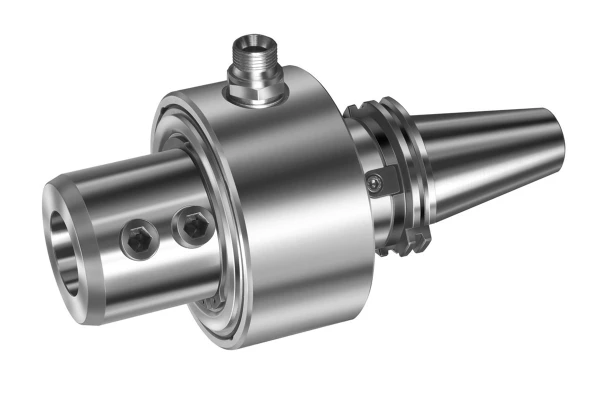 | Rotating coolant connector | For tools with internal coolant supply, Ø 12 to 115 mm (0.4724 to 4.5276 in) |
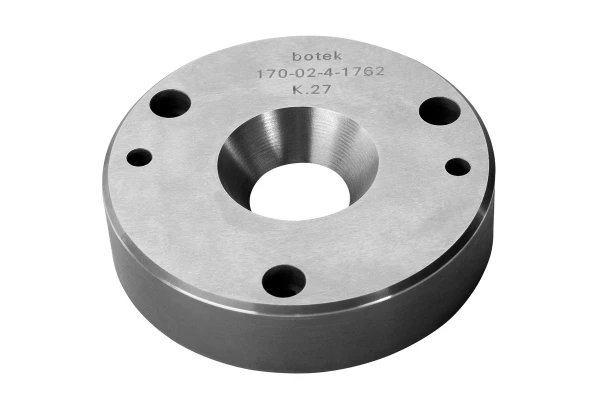 | Clamping cone | Workpiece reception |
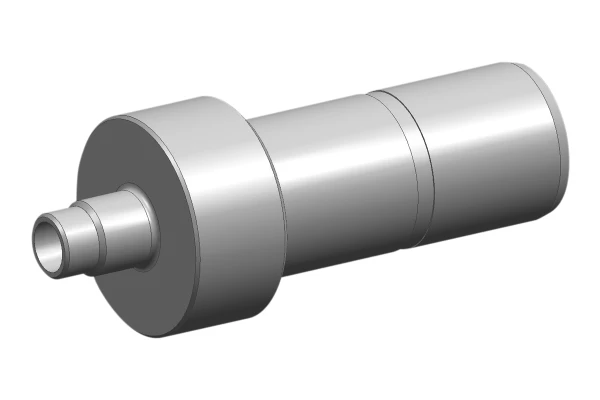 | Drill bush holder | Suits drill bushes to DIN 179A |
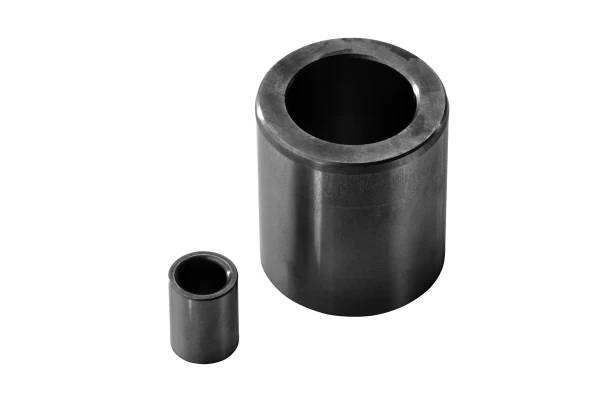 | Drill bushings | DIN 179 extended, steel, hardened throughout |
 | Whipguide bush | Ø 1.850 to 32.609 mm (0.0728 to 1.2838 in) |
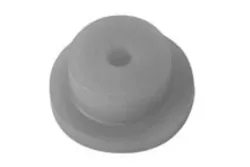 | Whipguide bush, small range | Ø 1.850 to 12.399 mm (0.0728 to 0.4881 in) |
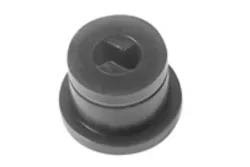 | Whipguide bush, formed type | Twin fluted drills Ø 5.000 to 27.000 mm (0.1968 to 1.0630 in) |
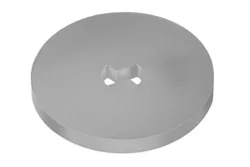 | Sealing disc | Twin fluted drills Ø 5.000 to 27.000 mm (0.1968 to 1.0630 in) |
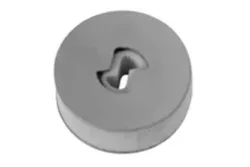 | Special sealing disc | Twin fluted drills Ø 5.000 to 27.000 mm (0.1968 to 1.0630 in) |
Also see the coolant pressure gauging kit for checking coolant pressure at the tool.
Learn how gundrilling works before you specify
Background from our technical guides.
Frequently asked questions
What is a twin flute gundrill?
A twin flute gundrill, also called a twin-fluted or two flute drill, has two flutes and a coolant supply through the tool for deep hole drilling. botek’s twin fluted types are solid carbide or brazed-head tools from 2 mm to 43.009 mm. An application engineer can confirm which type suits your hole.
Are twin flute, two flute and double flute gundrills the same?
In everyday use, yes. Shops use all three names. botek calls these tools twin fluted drills, and this page uses twin flute gundrills so you can find them under any of the names.
When should I choose a twin flute over a single flute gundrill?
It depends on diameter, hole depth, material and machine. botek’s catalog lists higher feed rates and cost-effective, precise holemaking as advantages of its twin fluted types. The twin fluted types listed here reach 43.009 mm, while the single flute range goes up to 113.99 mm. Send your drawing and an application engineer will advise.
Can I use a twin flute gundrill on a CNC machining center?
botek’s catalog describes its single and twin fluted gundrills as well suited to modern CNC machining centers. Hole depth, coolant pressure and set-up still matter, so check your case with an application engineer. Our guide on how gundrilling works explains the process.
Can I order twin flute gundrills online?
On botek.de the twin fluted types have catalog and flyer downloads rather than webshop links. Send your drawing and an application engineer will advise on the tool and how to order. For Types 120, 122, 123, 123-01, 123-02 and 125 you can also use the detailed order or inquiry form, which goes to botek® America.
Do you make larger or special twin fluted drills?
botek lists larger diameters on request for Type 120. For anything outside the standard range, send your drawing. The custom gundrill specification page explains what we need.
Not sure which twin flute gundrill you need?
Upload your drawing and describe the hole. An application engineer will review it and come back to you.