Knowing how to choose a gundrill matters because the wrong one does not fail on day one. It fails at depth, after the part already holds hours of machining.
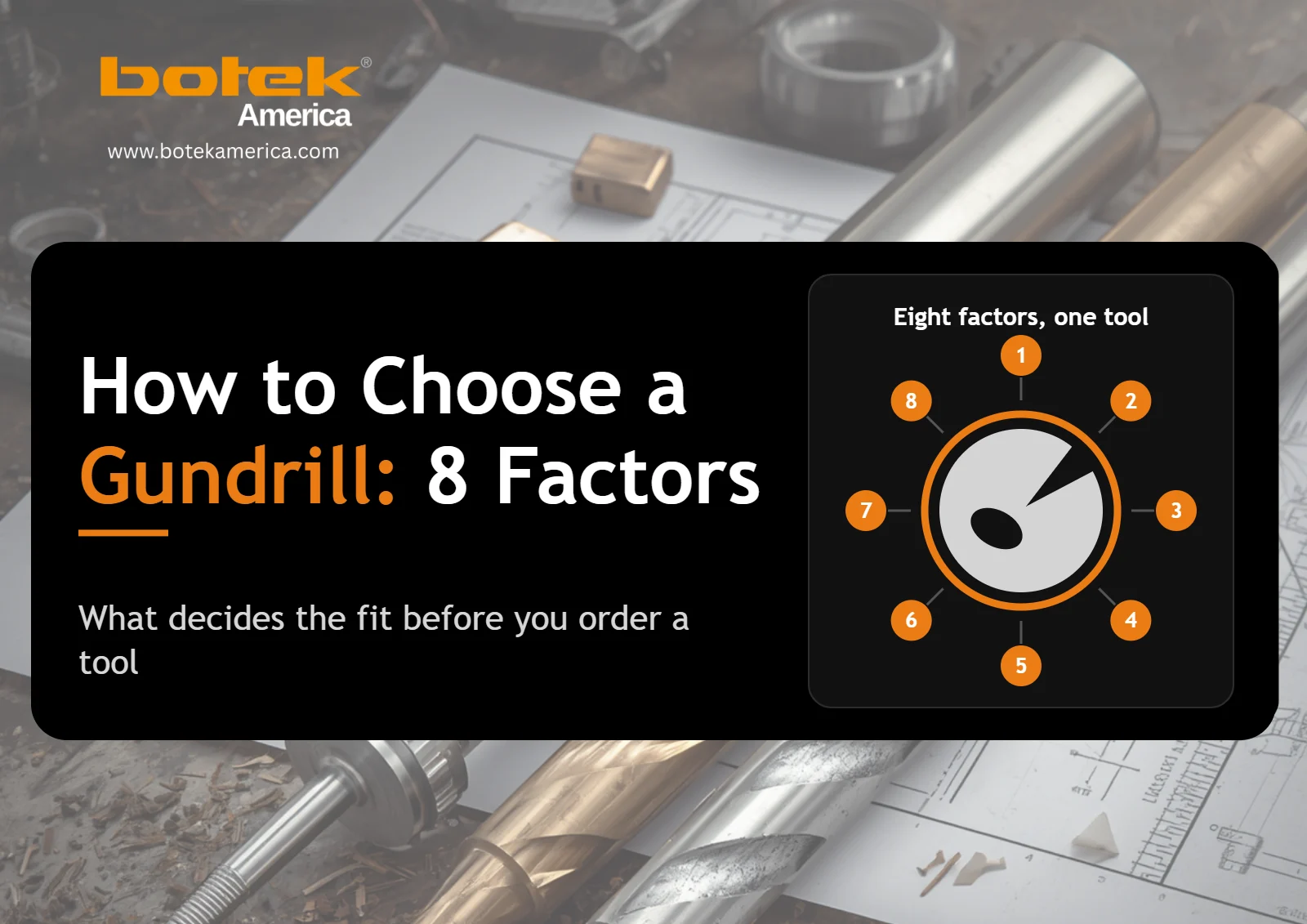
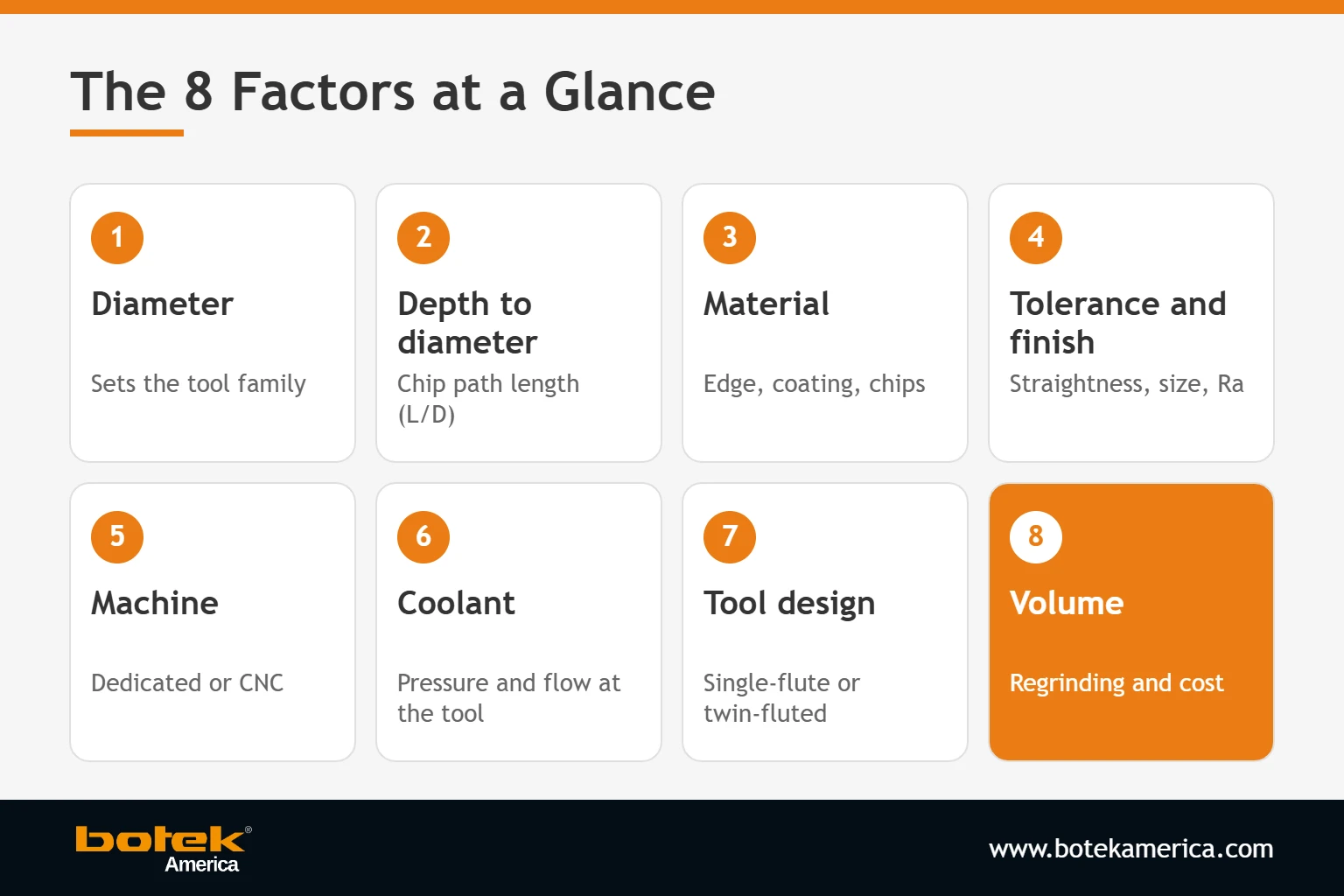
A drill that drifts, packs chips or breaks its carbide head inside a deep bore costs more than the tool: a scrapped workpiece, lost machine time and a late delivery. Most of those failures trace back to the choice, made before the first hole, not to the operator. To choose a gundrill, check eight factors in order: diameter, depth, material, tolerance and finish, machine, coolant, tool design and volume.
This guide shows what each factor decides and what goes wrong when you skip it. Send your hole size, material and machine to a botek® America application engineer and have the match reviewed before you order.
How to Choose a Gundrill Without Guessing
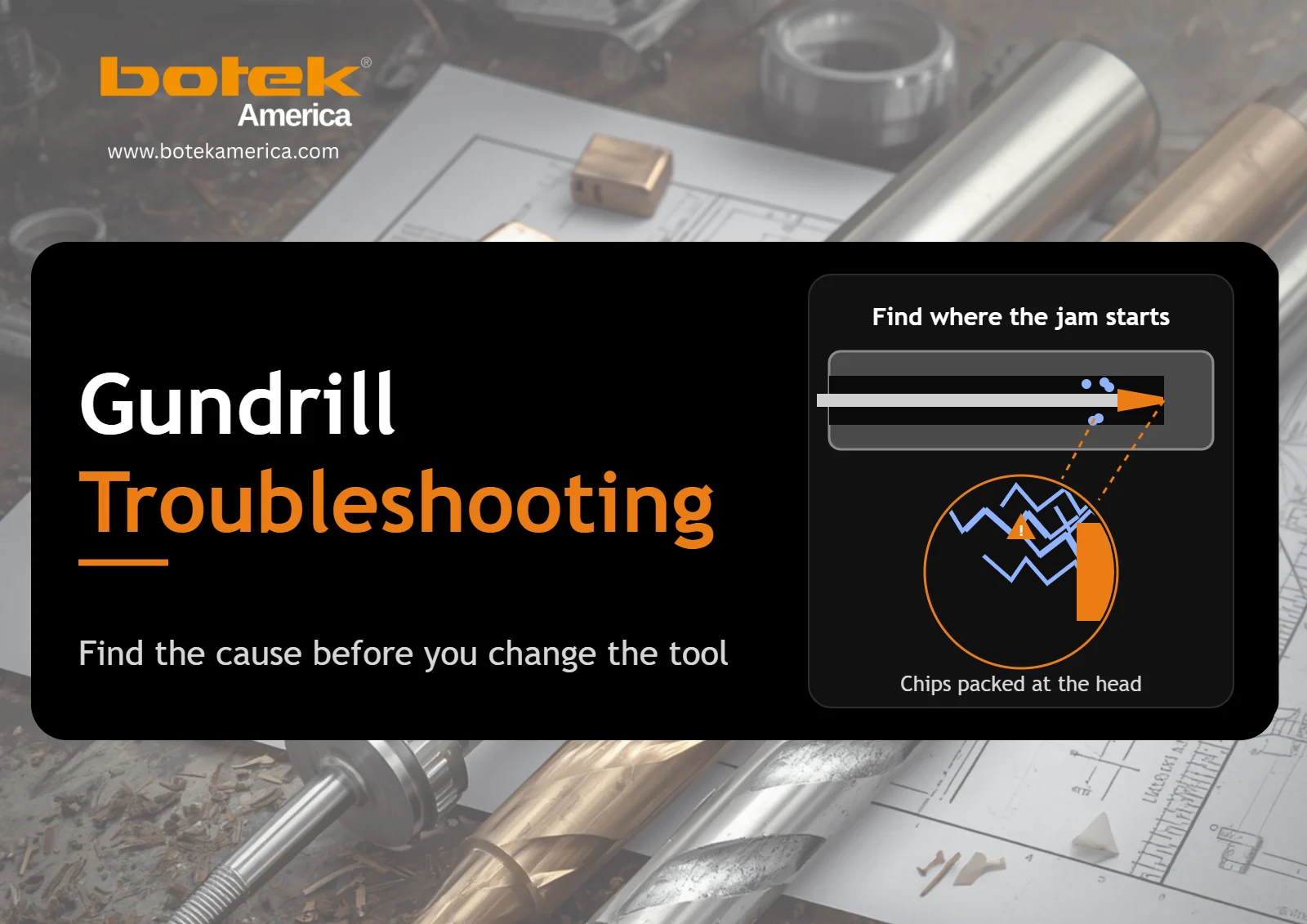
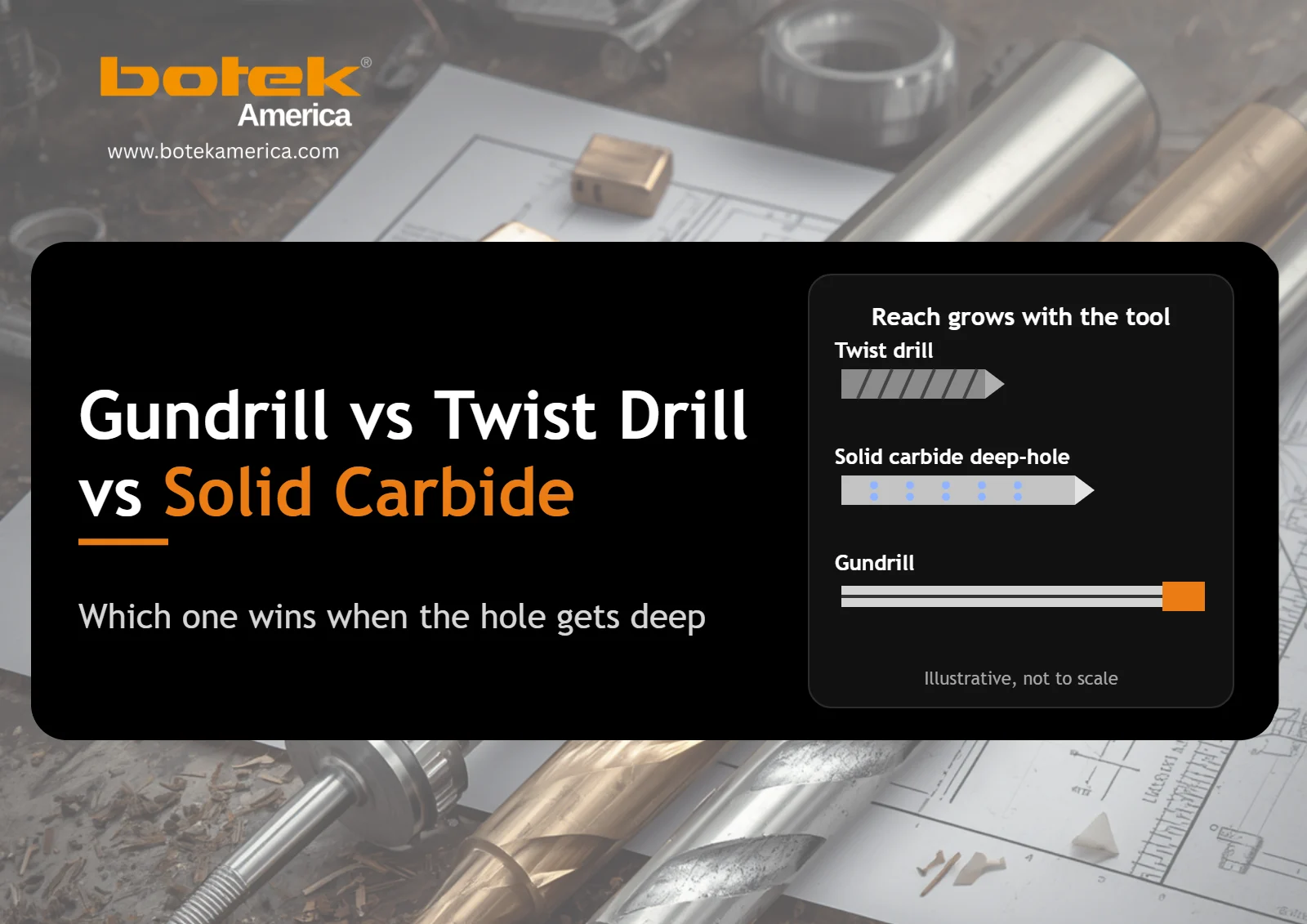
A gundrill is not a long twist drill. It has one cutting edge, two guide pads that burnish the bore and a V-shaped flute along the tube. Coolant goes in through the tube and returns along the flute, pushing chips out. Because the tool depends on that loop, a mismatch in any part of the setup shows up as chip packing, hole drift or a rough bore.
Buyers usually get into trouble in one of three ways. They pick on diameter alone and discover the machine cannot supply the coolant the tool needs. They copy last job’s tool onto a new material. Or they compare quotes on purchase price and ignore regrinds, scrap and downtime. The eight factors below show how to choose a gundrill without those gaps.
How to Choose a Gundrill: Hole Size and Depth
Factor 1: How to Choose a Gundrill Diameter
Diameter sets the tool family. botek® America’s gundrilling guide lists single-flute gundrills from 0.5 to 51.2 mm (0.020 to 2.016 in.) and twin-fluted gundrills from 4.5 to 43 mm. Check the range for your exact size and type before comparing anything else.
Factor 2: Depth to Diameter Ratio
The L/D ratio, depth divided by diameter, tells you how hard the chip return path will work. The same guide says a dedicated deep-hole machine reaches far higher ratios than a CNC machining center, and that a twist drill is limited to a much shallower ratio. Confirm the ratio your setup supports before you quote the job. Our comparison of gundrilling, BTA and ejector drilling helps when the hole is deep or large.
How to Choose a Gundrill for Your Material, Tolerance and Finish
Factor 3: Workpiece Material
Material changes the nose grind, the coating and the way chips form. Long-chipping materials such as stainless steel, titanium and Inconel make chip control harder than free-machining steel. botek® America says TiAlN is its standard coating for steel and cast iron, that DLC or uncoated carbide suits aluminum, and that titanium and stainless steel may need specialized coatings. Give the supplier the exact alloy and its hardness, not just the family.
Factor 4: Tolerance and Surface Finish
Write down the straightness, size tolerance and roughness (Ra) the hole must meet before you pick the tool. The gundrilling guide describes what the process can achieve under optimized conditions, but your result depends on setup and tool condition. If the drawing asks for more than the process gives, plan a finishing step now, not after the first scrap part.
How to Choose a Gundrill for Your Machine and Coolant
Factor 5: Machine Type
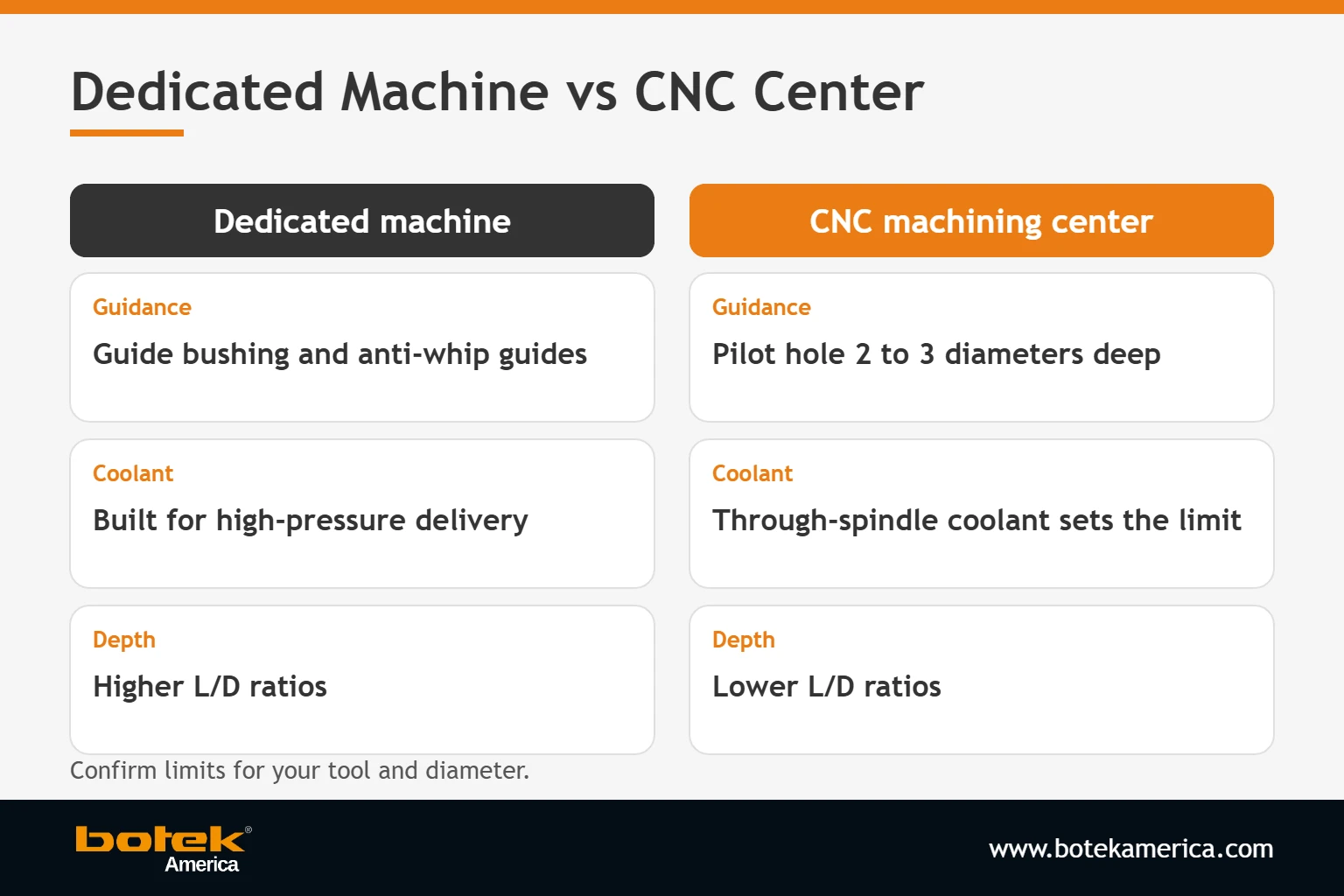
A dedicated gundrilling machine and a CNC machining center put different limits on the tool. Kip Hanson, writing in Cutting Tool Engineering, notes that dedicated machines add a guide bushing, anti-whip guides and monitoring of pressure, flow, power and thrust, while a CNC center needs a pilot hole and enough through-spindle coolant pressure. botek® America notes that the pilot hole should be at least two to three diameters deep. See why a CNC machine differs from a dedicated machine for deep holes.
Factor 6: Coolant Pressure and Flow
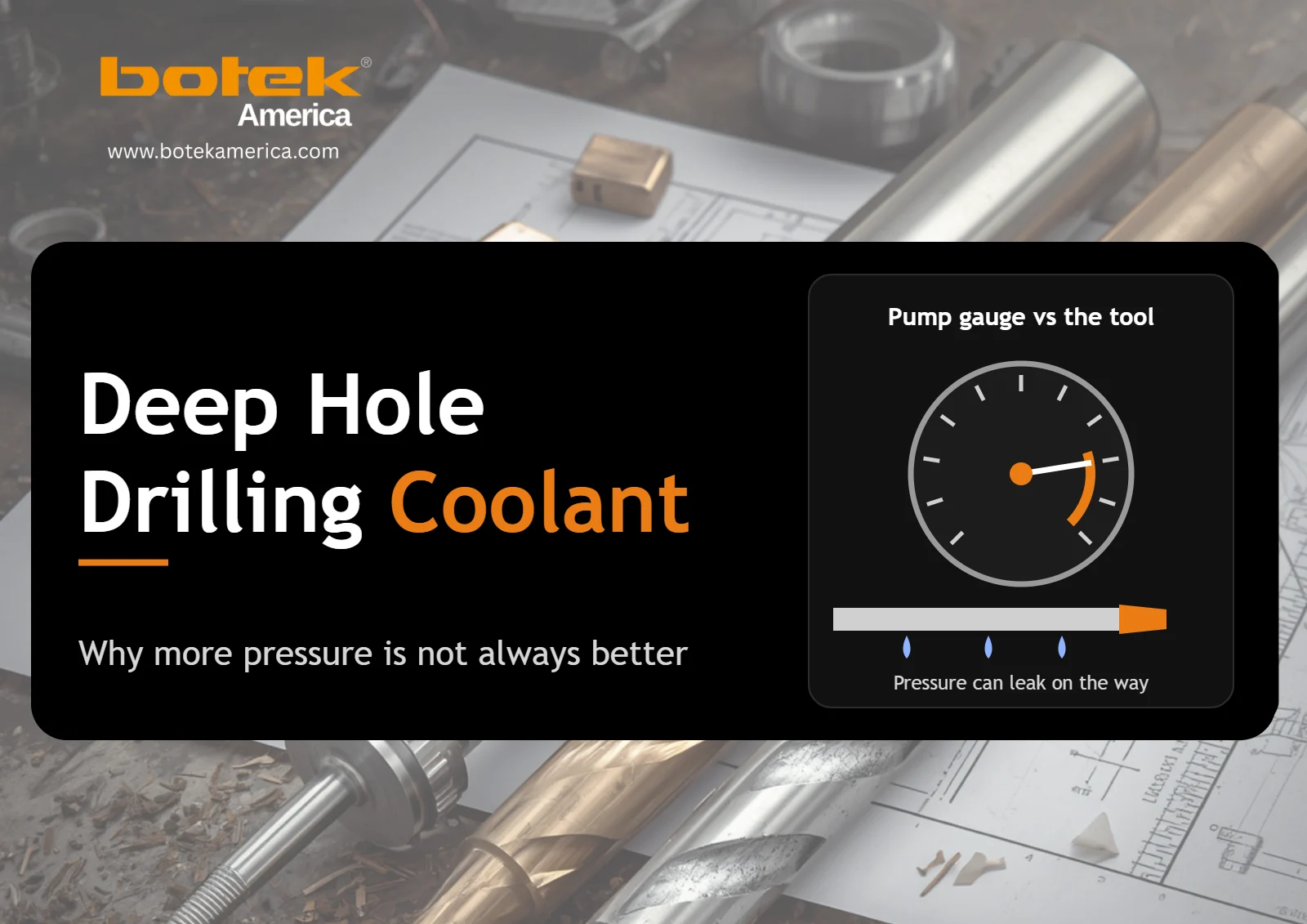
The tool must match what your coolant system delivers, measured at the tool and not at the pump. A drill with small coolant holes needs more pressure than a machine may be able to supply, however good the drill is. Our coolant pressure gauging kit measures what reaches the spindle outlet or the tool.
Tool Design, Volume and Support
Factor 7: Single-Flute or Twin-Fluted Design
Single-flute gundrills cover the widest diameter range in botek® America’s lineup. Twin-fluted designs cover a narrower range. Compare both on our gundrill types and ranges page. Ask which suits your diameter, material and machine, and what the trade-off is for your hole.
Factor 8: Volume, Regrinding and Application Support
High-volume work changes the math, because regrinding and recoating spread tool cost over more holes. botek® America runs an in-house regrinding service and a coating service, and offers customer testing tailored to your application. If your hole is not a catalog size, read our guide to a custom gundrill specification.
Gundrill Selection Worksheet
Use this table to check how to choose a gundrill for your hole, factor by factor, before you ask for a quote. If you cannot answer a row, that is the question to take to an application engineer.
| Factor | Question to answer | What goes wrong if you skip it |
|---|---|---|
| Diameter | Is the size inside the tool family’s range? | Wrong tool type, delays, a custom order |
| Depth to diameter | Does the machine support this L/D ratio? | Chip packing and breakage at depth |
| Material | What alloy, what hardness, how do the chips form? | Built-up edge, rapid wear, poor chip control |
| Tolerance and finish | Can the process hold straightness, size and Ra? | Scrap or an unplanned finishing operation |
| Machine | Dedicated machine or CNC center, and what guidance? | Drift, runout, whip at entry and exit |
| Coolant | What pressure and flow reach the tool? | Starved cut, jammed chips, overheated head |
| Tool design | Single-flute or twin-fluted, which head geometry? | Poor fit for the material or diameter |
| Volume | How many holes, and will you regrind? | Tool cost per hole higher than planned |
Common Mistakes When Choosing a Gundrill
1. Choosing on Diameter and Price Alone
Two tools of the same size can differ in head geometry, coating and regrind history. Compare them on cost per good hole, including scrap and downtime.
2. Assuming the Machine Can Run Any Gundrill
A tool that works on a dedicated machine may starve on a CNC center with lower coolant pressure and no anti-whip support. Check the setup before you order.
3. Copying the Last Job’s Tool Onto a New Material
Material changes chip form and wear. A tool that cut steel cleanly may pack chips in stainless steel. Re-check nose grind and coating when the alloy changes.
4. Ordering Without Knowing the Pressure at the Tool
The pump gauge can read normal while leaks, worn rotary feeds and long hose runs cut what reaches the drill. Measure at the tool first.
Questions to Ask Before You Choose a Gundrill
Put these to any supplier, including us. A good answer is specific to your hole, not a catalog statement.
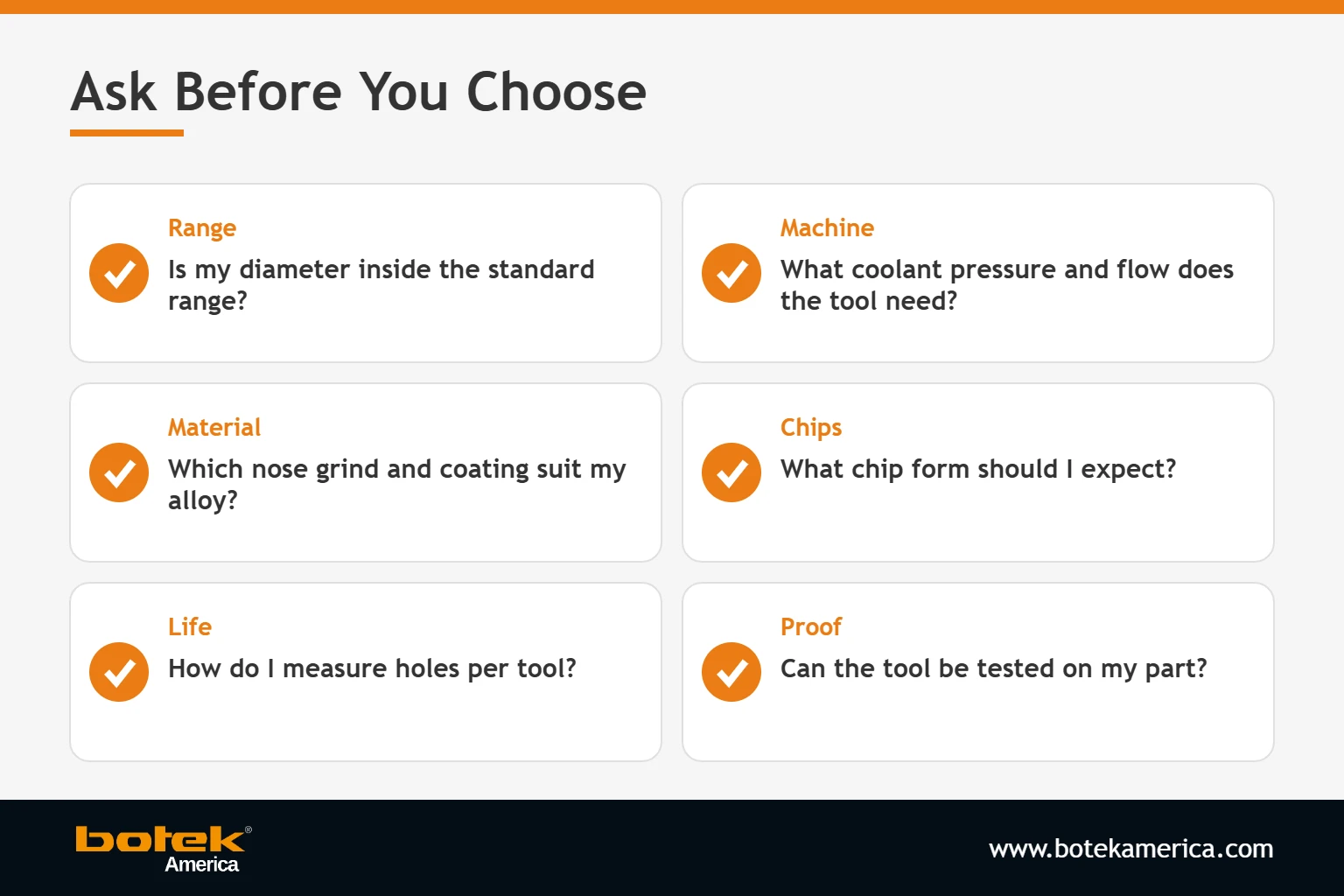
- Range: Is my diameter inside the standard range for this tool type?
- Machine: What coolant pressure and flow does this tool need, and does my machine supply them?
- Material: Which nose grind and coating suit my alloy and hardness?
- Chips: What chip form should I expect, and how do I confirm it?
- Life: How do I measure holes per tool, and when should I regrind?
- Proof: Can the tool be tested on my part before I commit to a batch?
When Another Process Is a Better Fit
Part of knowing how to choose a gundrill is knowing when not to. Gundrilling is not the only deep-hole method. BTA (Boring and Trepanning Association) drilling, also called single tube system drilling, sends chips back through the hollow tube and typically starts at larger diameters, per botek® America’s BTA drilling guide. Ejector drilling uses a double-tube system. If your hole is large, very deep or high volume, compare processes before you pick a tool.
Frequently Asked Questions
Which factor matters most when choosing a gundrill?
Diameter and depth set the tool family and the machine needed, so check them first. After that, the coolant system and workpiece material most often decide whether the tool runs stably.
Can the same gundrill run on a CNC center and a dedicated machine?
The tool can be the same, but the limits are not. Coolant pressure, spindle support and depth capacity differ between the two, so confirm the setup before assuming it will run the same way.
Should I buy a standard or a custom gundrill?
Choose standard when your diameter, material and depth fit a catalog tool. Consider custom when they do not, or when a process problem points to a geometry change.
What botek® America Brings to Gundrill Selection
botek® America imports and distributes botek deep-hole drilling tools and supports them with application engineering. For gundrill selection, that means:
- Application review: send hole size, depth, material and machine through the drilling application form.
- Customer testing: trials in the research and development department, tailored to your application.
- Regrinding and coating: in-house regrinding in Roselle, Illinois, plus a coating service.
- Special solutions: options when a catalog tool does not fit the hole.
Not sure how to choose a gundrill for your hole? Contact botek® America with your hole size, material and machine, and an application engineer can help you narrow the choice.